Hindu Marriage
Hindu Marriage is a religious Sacrament in which a man and a woman are bound in permanent relationship for the physical, social and spiritual purposes of dharma (dharma has the meaning of duty, dharma also employs the meaning of law, religion, virtue and ethics) procreation and sexual pleasure.
For the Hindus, vivaha is nothing short of a ‘vidhi’, i.e. it is something of a religious injunction. The Vedas lay down that dharma performed by a man alone without his wife is no dharma and will yield no fruit whatsoever.
A wife is also hailed as” the very source of the Purusharthas (four proper goals or aims of a human life according to Hindus), i.e. Dharma, Artha(prosperity, economic values), Kama(pleasure, love, psychological value) and Moksha(salvation, spiritual values). According to Hinduism the purpose of life upon Earth is to follow the law God(dharma) and achieve Salvation(Moksha) or freedom from his False-self (Ahamkaara) by leading a balanced life in which both material comforts and human passions have their own place and legitimacy.
Hindu Wedding Ceremony
The Hindu wedding ceremony at its core is essentially a Vedic yajna ritual. The primary witness of a Hindu marriage is the fire-deity (or the Sacred Fire) Agni, in the presence of family and friends. The ceremony is traditionally conducted entirely, or at least partially in Sanskrit, considered by Hindus as the language of holy ceremonies.
The main rituals of a Hindu marriage are:
1. Kanyadaana (Gift of a Virgin)
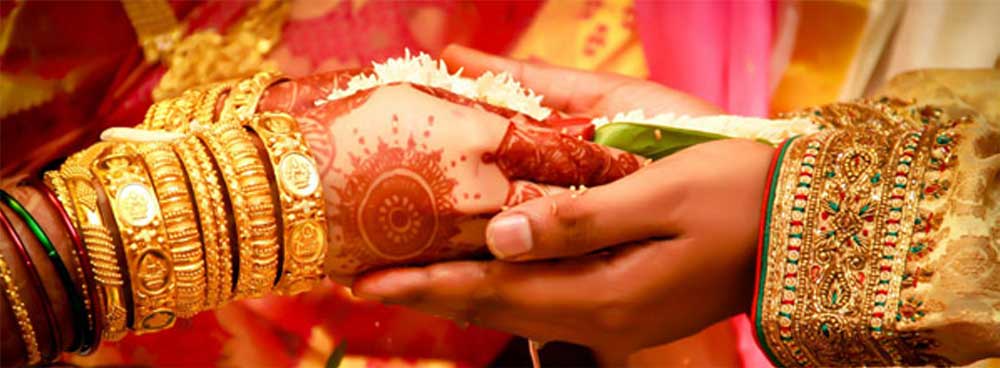
The Kanyadaan ceremony is performed by the father of the bride. The Kanyadaan ceremony is performed by the father. The groom accepts the bride's hand. The groom promises to the bride's father that he shall never fail her in his pursuit of dharma, artha and kama.
“धर्मेच अर्थेच कामेच इमां नातिचरामि ।
धर्मेच अर्थेच कामेच इमं नातिचरामि ॥”
Dharmēca arthēca kāmēca imāṁ nāticarāmi. Dharmēca arthēca kāmēca imaṁ nāticarāmi.
In my duty, in my financial commitments, in my needs, I will not violate you. [ Note: In essence it means - In my duty, in my financial commitments, in my needs, I will consult you, will take your consent and act upon. The first oath is taken by the groom and the second by the groom respectively thrice.
The Kanyaadaana ceremony marks the biggest transition in a bride’s life. The ceremony confirms the change of role in her life, from a daughter to a wife. From relative security of her father’s house, she now embarks on a unknown journey to a new place and new surroundings.
2. Panigrahana (Holding hands)
Here bride-groom holding brides right hand chants the following mantras.
प्रयुक्तपाणिग्रहणं यदब्यद् वधूवरं पुष्यति कान्तिमग्रयाम् । सांइध्ययोगाद्नयोस्तदानीं किं कथ्यते श्रीरुभयस्य तस्य ॥
prayuktapaanigrahanan yadabyad vadhoovaran pushyati kaantimagrayaam . saanidhyayogaadnayostadaaneen kin kathyate shreerubhayasy tasy .
When, by the presence of these (Uma and Shiva) other couples, on the eve of their marriage, attain a rare splendour, who could describe the glory of them both
3. Mangalasutra Ritual
The mangalasutra, a black and gold necklace with a gold or diamond pendant symbolizes good luck, love and friendship. In Sanskrit, ‘Mangala’ translates to sacred and ‘Sutra’ to thread. Following the paanigrahana, the bride moves to sit on the grooms left side, taking the closest position to the groom’s heart. He then proceeds into the ceremony ‘Maangalyadhaaranam’ and places the mangalasutra around her neck and applies Sindoor, red vermilion also known as Kumkum, to the centre of her forehead. These tow offerings signify the groom’s devotion to his bride and the Bride’s new status as a married woman.
4. Sapthapadi
Sapthapadi means “seven steps”. After tying the Mangalasutra, the newlywed couple take seven steps around the holy fire, that is called Saptapadi. After the seventh step, the couple legally become husband and wife.
(Following vows are taken during seven steps)
Vows taken by the groom:
1. इष एकपदी भव-सामामनुव्रताभव-पुत्रान्विदावहैबहूंस्तेसंतुजरदष्टय:||
Iṣa ēkapadī bhava-sāmāmanuvratābhavaputrānvidāvahaibahūnstēsantujaradaṣṭaya:||
O' bride you have walked one step with me. Now we have become friends; hence you will become provider of food. Help me to fulfil my vowed religious observances (vats). May we have many sons and may they have a long life.
2. उर्जेव्दिपदीभव-सामामनु० ।।
Urjēvdipadībhava-sāmāmanum
(The rest should be chanted like the mantra at number 1 and the same should be repeated when each mantra’s chanted.)
O bride, you have walked two steps with me; hence may you become one who will give me strength.
3. रायस्पोषायत्रिपदी भव० ।। (Rest as No.1.)
Rāyaspōṣāyatripadī bhavam
O bride, since you have walked three steps with me, may you become one who will increase my wealth.
4. मायोभव्यायचतुष्पदी भव० ।। (Rest as No.1.)
Māyōbhavyāyacatuṣpadī bhavam
Since you have walked four steps with me may you increase my happiness.
5. प्रजाभ्य: पंचपदी भव० ।। (Rest as No.1.)
Prajaabhyaha panchpadee bhavam
Since you have walked five steps with me, may you give birth to children.
6. ऋतुभ्य: षट् पदी भव० ।। (Rest as No.1.)
R̥tubhya: Ṣaṭ padī bhavam
Since you have walked six steps with me may you give me pleasure in all seasons.
7. सखासप्तपदीभव० ।। (Rest as No.1.)
Sakhāsaptapadībhavam
You have walked seven steps with me, hence our friendship (relationship) has become strong.
Vows taken by the bride:
1. त्वत्तो मेऽखिलसौभाग्यं पुण्यैस्त्वं विविधै: कृतै: ।
देव ! संपादितो मह्यं वधूराद्ये पदेऽब्रवीत् ।।
Tvatto mekhilasaubhaagyan punyaistvan vividhai: krtai: .
deva ! sampaadito mahyan vadhooraadye padebraveet .
O Lord! I have had the good fortune of acquiring you due to the various types of merits acquired by me in various births.
2. कुटुंबं पालयिष्यामि ह्यावृद्धबालकादिकम् ।
यथालब्धेन संतुष्ठा व्रते कन्या व्दितीयके ।।
Kuṭumbaṁ pālayiṣyāmi hyāvr̥d'dhabālakādikam .
Yathālabdhēna santuṣṭhā vratē kanyā vditīyakē
I will look after your entire family, from the infant to the aged and will be happy with whatever I get for my sustenance.
3. मिष्ठान्नव्यंजनादिनी काले संपादये तव ।
आज्ञासंपादिनी नित्यं तृतीये साऽब्रवीव्दरम् ।।
Miṣṭhānnavyan̄janādinī kālē sampādayē tava.
Ājñāsampādinī nityaṁ tr̥tīyē sā̕bravīvdaram ..
I will always abide by your directives and will regularly cook delicious food, vegetables, etc.
4. शुचि: शृंगारभूषाऽहं वाङ्मन: कायकर्मभि: ।
क्रीडि ष्यामि त्वया सार्धं तुरीये सा वदेव्दरम् ।।
Shuchi: shrngaarabhooshaahan vaanman: kaayakarmabhi: .
Kreedi shyaami tvaya saardhan tureeye sa vadevdaram ..
I will embellish myself with clean attire and will indulge in sexual play with you through acts with the mind, speech and body.
5. दु:खे धीरा सुखे हृष्टा सुखदु:खविभागिनी ।
नाहं परतरं यामि पंचमे साऽब्रवीव्दरम् ।।
Du:Khē dhīrā sukhē hr̥ṣṭā sukhadu:Khavibhāginī.
Nāhaṁ parataraṁ yāmi pan̄camē sā̕bravīvdaram ..
I who face sorrow bravely and remain pleased in happiness will share both your happiness and sorrow and will never indulge in adultery.
6. सुखेन सर्वकर्माणि करिष्यामि गृहे तव ।
सेवा श्वसुरयोश्चामि बन्धूनां सत्कृतिं तथा ।।
यत्र त्वं वा अहं तत्र नाहं वञ्चे प्रियं क्वचित् ।
नाहं प्रियेण वञ्चा हि कन्या षष्ठे पदेऽब्रवीत् ।।
Sukhēna sarvakarmāṇi kariṣyāmi gr̥hē tava.
Sēvā śvasurayōścāmi bandhūnāṁ satkr̥tiṁ tathā..
Yatra tvaṁ vā ahaṁ tatra nāhaṁ vañcē priyaṁ kvacit .
Nāhaṁ priyēṇa vañcā hi kanyā ṣaṣṭhē padē̕bravīt ..
I will happily perform all your household chores. I will also serve my in-laws and will respect other relatives. I will stay wherever you stay. I will never deceive my beloved (master) and will never get deceived by him.
7. होमयज्ञादिकार्येषु भवामि च सहाय्यकृत् ।
धर्मार्थकामकार्येषु मनोवृत्तानुसारिणी ।।
सर्वेऽत्र साक्षिणस्त्वं मे पतिर्भूतोऽसि सांप्रतम् ।
देहो मयार्पितस्तुभ्यं सप्तमे साऽब्रवीव्दरम् ।।
Hōmayajñādikāryēṣu bhavāmi ca sahāyyakr̥t .
Dharmārthakāmakāryēṣu manōvr̥ttānusāriṇī..
Sarvē̕tra sākṣiṇastvaṁ mē patirbhūtō̕si sāmpratam .
Dēhō mayārpitastubhyaṁ saptamē sā̕bravīvdaram ..
O master! I will assist you in the rituals of sacrificial fires (homa-yajnya), etc. and will obey you with regard to Righteousness (Dharma), wealth (artha) and desire (kama). Here, in the presence of the deity of fire (Agnidev), the Brahmans, my parents and relatives, you have become my master and I have offered my body unto you.